Forget the hype for a second. Automation isn’t about pressing a button and watching money appear. It’s about removing friction—step by step—until the process runs with almost no resistance.
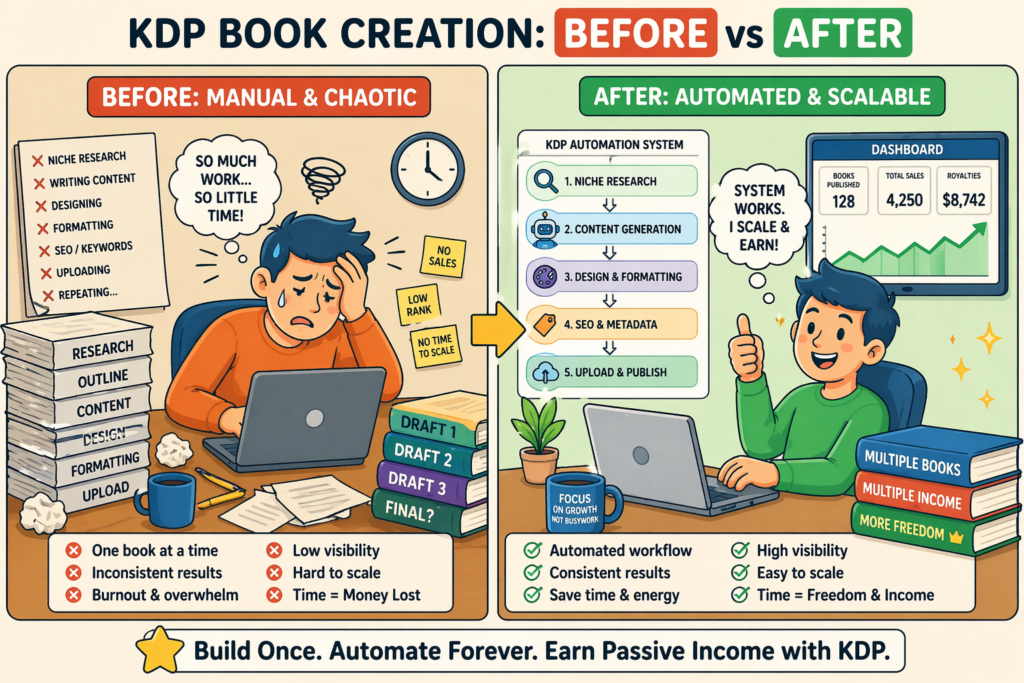
In practical terms, that means you’re no longer creating books manually. You’re designing a workflow that produces them.
Some books are simple by design—journals, planners, trackers. Others carry more substance, shaped with the help of AI into structured, useful content. Both have their place. And when used together, they create momentum.

The System Behind the Scenes
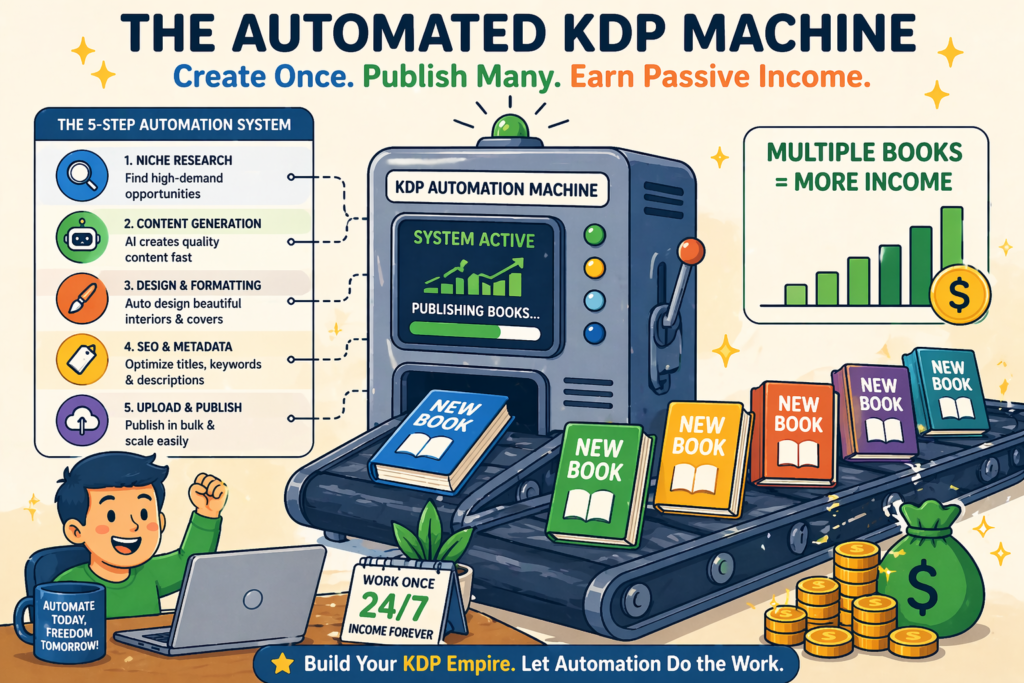
Every automated KDP setup—no matter how advanced—follows the same underlying structure. Once you understand it, everything clicks into place.
First comes discovery. Not guessing, not brainstorming—finding real gaps where people are already searching but not being served well.
Then comes creation. Instead of staring at a blank page, you guide tools to generate structured content that actually matches what readers want.
Design follows. Clean layouts. Consistent covers. Nothing fancy—but nothing amateur either.
Then comes the invisible layer most people overlook: metadata. Titles, keywords, categories. This is where discoverability lives or dies.
And finally, execution. Not one book. Multiple. Published in batches. Built on patterns that already work.
Building It Step by Step
It starts smaller than you think.
You find a niche that feels almost too specific—something like a gratitude journal for nurses, or a habit tracker for students. That specificity is your advantage.
From there, you create the interior. Not by writing endlessly, but by assembling structured pages that serve a purpose.
Covers come next. You don’t need to reinvent design—you just need something that fits the expectation of that niche. Clean. Clear. Clickable.
Then you shape the listing. A title that mirrors how someone would actually search. A description that feels natural but still guides the reader toward clicking “Buy.”
And then—you repeat.
Not randomly. Intentionally.
Where Most People Get Stuck
There’s a pattern that shows up again and again.
Some people rush the content. It looks fine at first glance, but it doesn’t actually help anyone. That shows up later—in poor reviews, low engagement, and zero traction.
Others skip the research. They create books no one is searching for, then wonder why nothing happens.
And then there are those who ignore the metadata completely. Great book, invisible listing.
The system only works when every piece connects.
When Things Start to Scale
At first, it feels slow. A few books here and there.
But then something shifts.
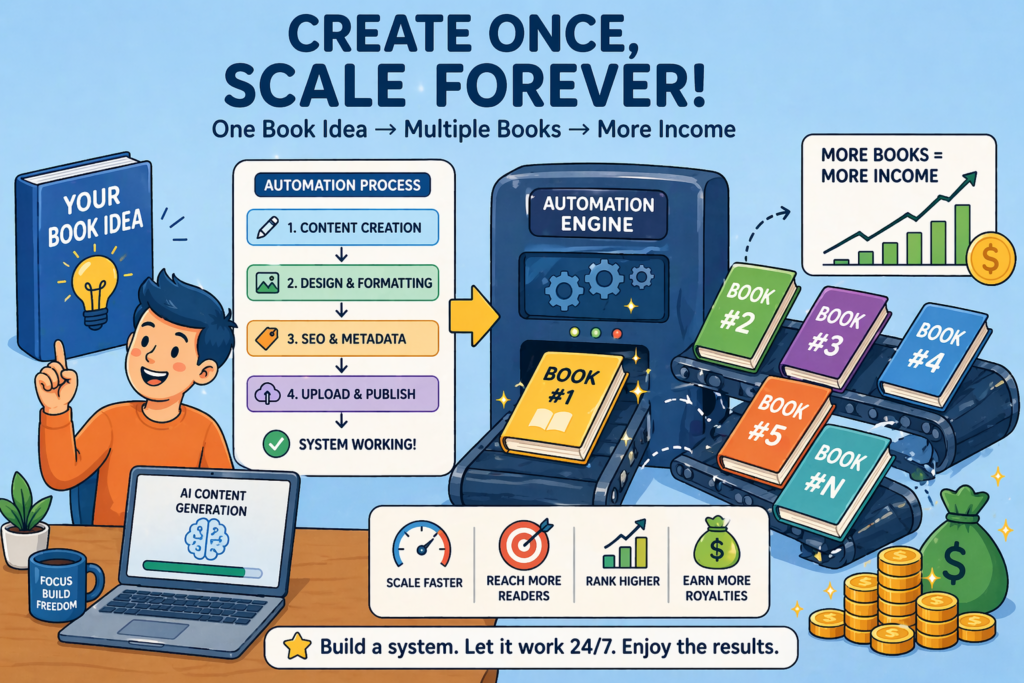
You begin to notice patterns—what niches respond, what designs get clicks, what titles rank faster. And instead of starting from zero each time, you build on what already works.
One book becomes five. Five becomes twenty.
And eventually, you’re no longer “creating books.” You’re expanding a system.
The Direction This Is Going
Automation is getting stronger. Faster. Smarter.
But the core principle hasn’t changed: usefulness wins.
It doesn’t matter how the book is created. What matters is whether it matches what someone was hoping to find when they searched.
That’s the part no tool can fake.
Products / Tools / Resources
If you’re serious about building a streamlined KDP system, the right tools can remove months of trial and error.
One solution worth looking into is Sansuu Royalty. It’s designed specifically for automating large parts of the KDP workflow—from niche validation to content structuring and scalable publishing. Instead of stitching together multiple tools, it centralizes the process, which can dramatically reduce friction when you’re trying to scale beyond just a few books.
Alongside that, most creators also rely on:
- AI writing assistants for structuring content
- Interior generators for journals and planners
- Design platforms for fast, consistent covers
- Keyword research tools to uncover low-competition opportunities
You don’t need a perfect stack from day one. Just remove the biggest bottleneck first—and let your system evolve from there.